
LOW PROTEIN GELATO
22/07/2025
In Italy, around 50,000 patients are on dialysis and just as many live with a kidney transplant, placing a significant burden on the National Health Service, in addition to the human and social costs for patients and families, as journalist Bruno Damini notes, author of Il Mondo dei Fagioli Ribelli (The World of Rebellious Beans). To slow the progression of kidney damage and delay the need for dialysis, nutritional education and a balanced diet play a fundamental role. This is precisely the need that gave rise to the I Fagioli Ribelli (The Rebellious Beans) project, launched by the Pediatric Nephrology Unit at Sant’Orsola Hospital in Bologna. The project was developed thanks to the contribution of numerous partners and third-party funders, with the goal of improving the quality of life of children with chronic kidney disease. The first phase of the project concluded with the organization of six therapeutic nutrition education workshops, aimed at pediatric patients with chronic kidney disease.
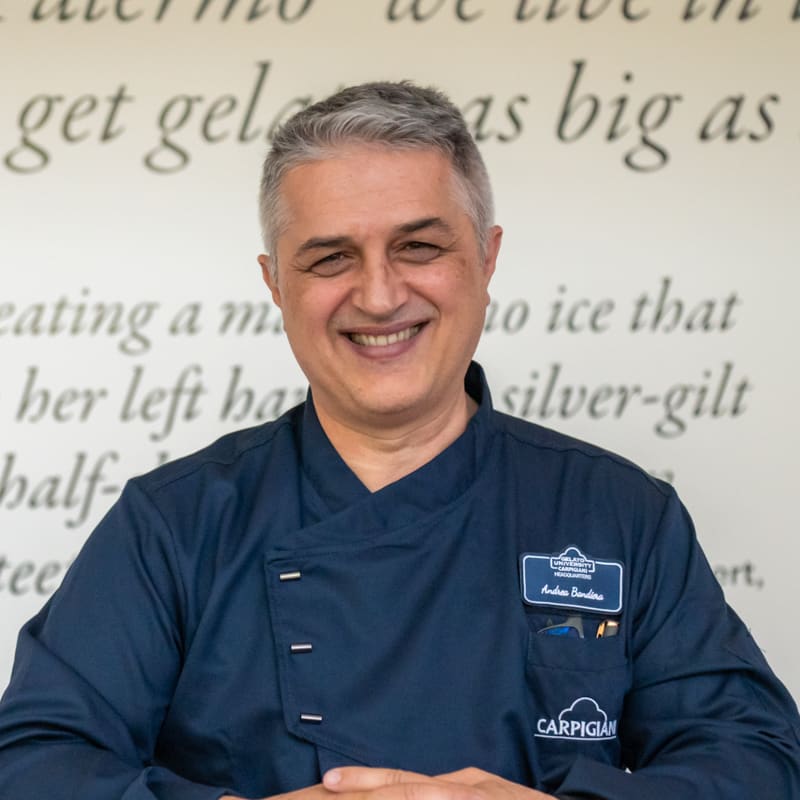
Andrea Bandiera explains how he became involved in the initiative: «It all began thanks to Bruno Damini, several years ago, before Covid. Bruno came to my gelato shop saying he wanted to interview children living with kidney disease. Then, together with Dr. Andrea Pasini, we agreed to set up an initial working group involving a chef and a gelato artisan – myself – working together to develop recipes based on parameters provided by dietitians. These recipes had to contain less than 1% protein, low potassium, and other characteristics suitable for this type of patient. Once testing was completed and the right balance found, we held free public workshops streamed online, allowing parents of children with chronic kidney disease to learn how to make recipes that are nutritionally correct but also appealing, tasty, and easy to replicate at home. The products were quite popular! However, while the hands-on part went smoothly, the bureaucratic part proved very complex. Eventually we succeeded: the project was approved by the Ministry and is now continuing. A serious problem remains, however, in terms of outreach. For initiatives like this, a major communications effort is always needed to reach the public and raise awareness in other hospitals».
That’s precisely why Carpigiani Gelato University has included a free online specialization module in its curriculum, dedicated to the creation of low-protein gelato, led by Andrea Bandiera and the project’s dietitians. It’s an innovative course, made available at no cost to gelato professionals to promote and support the initiative, with the aim of eventually extending it to adult patients as well.
«Bruno had known me for years and approached me because he was looking for someone who could balance ‘extreme’ recipes, with characteristics that we don’t normally consider when creating flavors for traditional gelato. From a commercial point of view, this isn’t a product with a big market: it’s clearly a niche offering, designed for a specific audience. I kept it on the menu for quite a long time and now I make it on request. Anyone interested can order it at my gelato shop».
Today, the pharmaceutical industry has significantly expanded the range of products and food preparations available for people on specialized diets. But at the start of the project the options were limited and families struggled to find suitable alternatives. The situation has improved, but it remains essential to keep promoting and communicating this type of initiative and product.
«Following on from this project, in recent years I’ve created other recipes with specific nutritional properties. In fact, thanks to its natural ability to engage and uplift, gelato is an excellent vehicle for conveying nutritional and dietary principles to patients of all ages, including children».
For more information about the I Fagioli Ribelli project, visit www.ifagioliribelli.it or www.facebook.com/ifagioliribelli and www.instagram.com/i_fagioli_ribelli. Chronic Kidney Disease (CKD) is a clinical condition characterized by the progressive loss of kidney function, which may lead to end-stage renal failure. Based on glomerular filtration rate, which estimates residual kidney function, it is classified into five stages of increasing severity. Its prevalence (underestimated due to its asymptomatic nature in early stages) is around 7.5% of the Italian population, with 4% of cases in stages 3 to 5. The condition affects over 4 million adults in Italy and around 30,000 individuals under the age of 18.
For children, in most cases it’s not possible to eliminate the underlying cause of the disease, but only to slow its progression through “conservative” therapy, which includes medication, behavioral measures and dietary guidance. Mild forms can be slowed for extended periods, but moderate and severe cases inevitably progress toward kidney failure requiring replacement therapy (hemodialysis or peritoneal dialysis) and kidney transplantation.


Comments (0)