
CHOCOLATE GELATO
10/09/2025
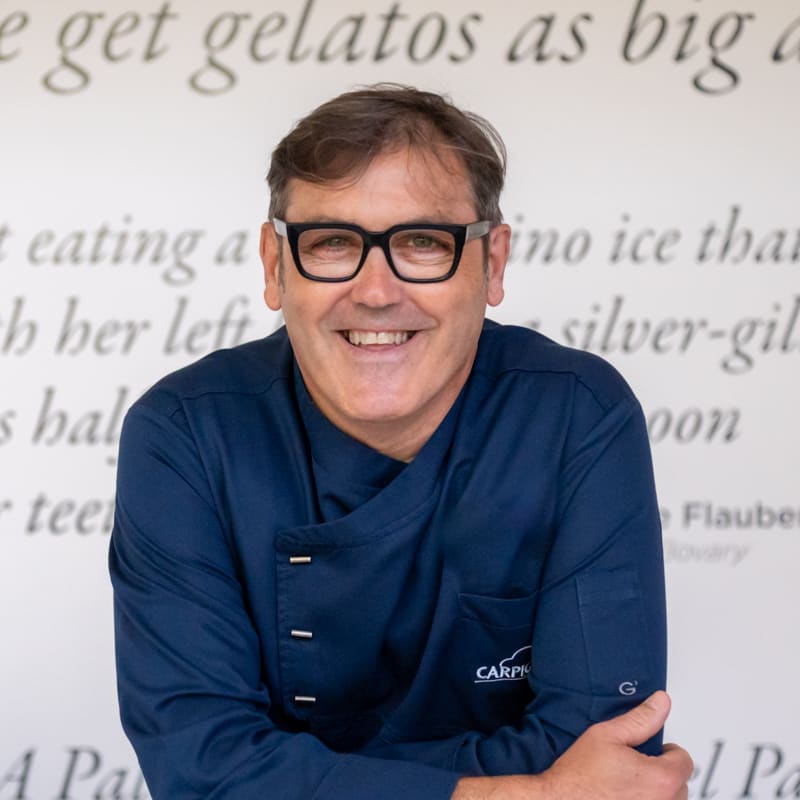
Chocolate gelato has always been a fascinating flavor, perhaps the very first to captivate us in childhood, a delight for both children and adults alike, tell us or gelato maestro Palmiro Bruschi. «In the past, it was mainly made with cocoa rather than real chocolate: knowledge of the raw material was different, and the variety of ingredients we have today simply didn’t exist,» explains Palmiro. «Customers were also less informed, whereas today there is much greater curiosity: it’s not unusual to find gelato shops offering more than one chocolate flavor — white, milk, or dark». This is not a fancy choice by gelato artisans who enjoy creating multiple recipes; with chocolate, it’s truly possible to craft different flavors, appealing to a variety of palates and diversifying the offering.
«Each variety today expresses aromatic notes that were once unknown to consumers, especially those far from the producing countries», which is why it is essential to process cocoa using non-invasive methods. Thanks to new technologies and the knowledge acquired, today’s producers are able to work with raw materials while preserving their organoleptic properties, allowing chocolate to express unique nuances and leave a pleasant, lingering finish—even in gelato form. «For us gelato makers, it would be a shame to spoil the work of the producers! It’s wonderful to think that the flavor of gelato I create in my laboratory can convey the same aromatic notes derived from its terroir of origin».
Chocolate is an extraordinary product in many respects: for its malleability, its properties, its sensory qualities, and its evocative power. It is no coincidence that its name recalls the “food of the gods.” It is essential to understand what chocolate truly is and the processes that influence its qualities — fermentation, roasting, conching, and so on—just as it is important to know how best to work with it “below 0°C”. For this reason, Carpigiani Gelato University has created a specialization course entirely dedicated to chocolate gelato: to learn how to harness its sensory versatility, starting from the flavors of different varieties, developing multiple recipes with various processing techniques, and exploring the properties of a raw material that is anything but ordinary.
Chocolate lends itself to countless pairings: with plant-based drinks, spices, or different fruits and much more. These combinations allow artisans to create unique offerings and stand out from the competitors. «It’s possible to craft a personalized flavor starting from a base or a dark chocolate, working on custom blends just like a winemaker does in the cellar. Once the work in the lab is finished, the role of the counter assistant becomes fundamental: they are the ‘ambassador’ responsible for explaining the flavors to the customer. Personally, I love pairing chocolate with tobacco: I create an infusion that must be explained and narrated so the customer understands that it is a delicate, carefully crafted flavor, thereby avoiding the negative associations the word tobacco might evoke.» 

Comments (0)